NASA HERC 2027
Human Exploration Rover Challenge
- Final event
- –
- Venue
- U.S. Space & Rocket Center
Huntsville, Alabama, USA - BIRT’s division
- Middle/High School
Remote-Control
The challenge
How do you build a rover that can steer through loose gravel, cross a ravine and still carry out a science task? NASA gives student teams nine months to work through that question, from their first proposal to a timed drive in Huntsville.
Middle schools, high schools and universities from the United States and abroad take part. Some teams build a rover that students pedal. Others, including BIRT, build a vehicle that pilots steer by remote control. NASA reviewers follow the designs through testing and assess readiness before teams enter the course.
The competition began in 1994 as the Great Moonbuggy Race, drawing on the lunar rovers used by Apollo astronauts.
BIRT’s entry
Bangladesh Interplanetary Rover Team represents Bangladesh in the middle/high school remote-control division. NASA’s 2026–2027 roster lists our entry under St. Joseph Higher Secondary School in Dhaka, one of 13 institutions selected for this division.
Rover & course
What students build
Middle and high school RC teams design and make their own chassis, wheels and tires. The battery-powered rover must weigh no more than 60 lb and stay within 5 mph during an excursion.
What the pilots do
Each RC run has a 12-minute limit. The 2027 course plan includes ten obstacles, from loose surface material to slopes and boulders. Pilots choose where to attempt an obstacle and where to take a bypass.
What the rover does on its own
For the optional task mission, pilots can position the rover at the station. From there, the rover must carry out radio instructions autonomously. These can call for a timestamped photograph or a distance measurement. The pilots report their results to the judges after the run.
How judging works
The RC score combines design and readiness reviews, obstacle performance and mission tasks. To qualify for an overall ranking, a team must finish at least one of its two excursions within the time limit.
2027 NASA handbook (PDF)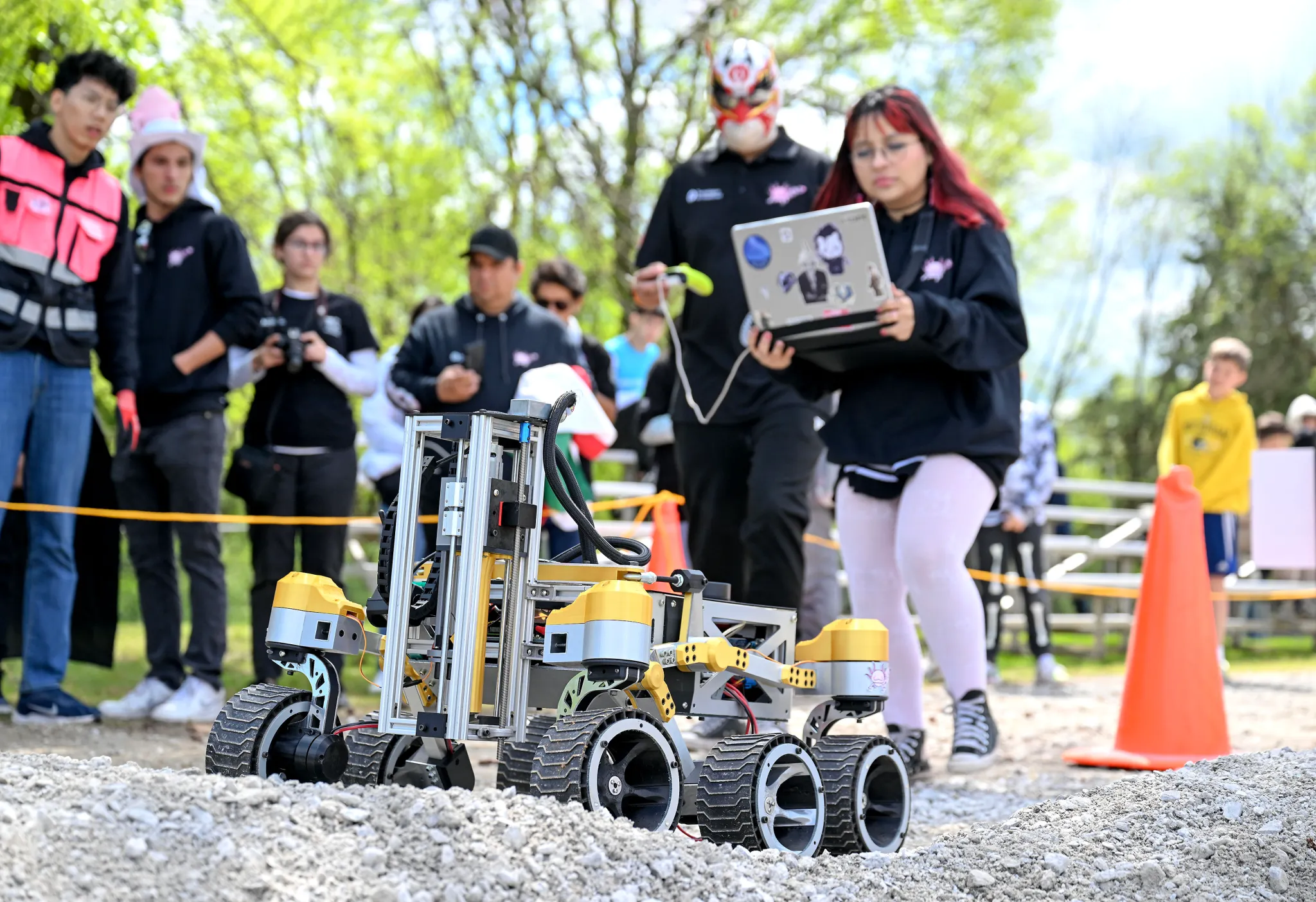
Season schedule
These dates come from NASA’s tentative 2026–2027 timeline. Submission deadlines are at 8 a.m. U.S. Central Time.
- Oct 8, 2026NASA announces the teams selected from the proposal round.
- Nov 24, 2026Teams submit their Design Review reports and slides. Presentations run from November 30 to December 18.
- Feb 22, 2027Operational Readiness Review reports, slides and rover photos are due. Teams present their work March 1–19.
- Apr 22–24, 2027Teams meet in Huntsville for the final event, including on-site checks and rover excursions.